
Specialist practice in Berlin · Orthopaedics & Trauma Surgery

Ingrown toenail: Causes, symptoms and treatment in Berlin

An ingrown toenail is painful and often gets worse without treatment. Here you can find out how to recognise it, what you can do yourself and when treatment is necessary. At the practice of Dr. Univ.-PD Amro Homssi, we treat ingrown toenails gently with laser, as an outpatient procedure under local anaesthetic.

  • Consultation appointment usually within 24 h
  • Outpatient, under local anaesthetic
  • Over 3,000 satisfied patients
  • 3.000+Satisfied patients
  • 24 hConsultation appointment
  • 90 %Laser success rate
  • SpecialistOrthopaedics & Trauma Surgery

What is an ingrown toenail?

With an ingrown toenail (medical term: Unguis incarnatus), the side edge of the nail presses into the surrounding nail fold and grows into the skin. This causes pain, redness and swelling, especially when walking and in closed shoes. If the irritation persists, the area can become inflamed and form pus or proud flesh.

Left untreated, an ingrown toenail often gets worse. If your immune system is weakened or you have diabetes, an infection can spread. That is why it is worth recognising it early and treating it properly.

Typical stages

  • Stage I: redness, slight swelling and pain on pressure at the nail edge.
  • Stage II: inflammation with pus; the pain increases significantly.
  • Stage III: in addition, proud flesh (granulation tissue) growing over the nail edge. More on proud flesh on the toe (in German)

Causes of an ingrown toenail

  • Incorrect cutting: Nails cut too short or with heavily rounded corners increase the risk of the nail growing into the skin.
  • Unsuitable footwear: Tight or too small shoes put pressure on the toes and push the nail edge into the tissue.
  • Injuries: Knocks or crush injuries to the toe can cause the nail to grow in.
  • Anatomical predisposition: Strongly curved nails or a particular toe shape make ingrowth more likely.
  • Inadequate foot care: Softened or damaged skin at the nail edge becomes inflamed more easily.
Symptoms

How do I recognise an ingrown toenail?

These signs suggest that your toenail is ingrown:

  • Stabbing or throbbing pain at the nail edge, especially under pressure and in shoes
  • Redness and swelling of the skin next to the nail
  • The area is tender and feels warm
  • Pus at the nail edge, a sign of infection
  • Proud flesh (granulation tissue) at the nail fold
  • The symptoms keep coming back

What you can do yourself

At an early stage, i.e. with slight redness and no pus, simple measures can relieve the symptoms:

  • Foot bath: 15 to 20 minutes in warm water with a mild disinfectant additive softens the skin and soothes the inflammation.
  • Avoid pressure: Wear comfortable, sufficiently wide shoes and take the pressure off the toe.
  • Cut correctly: Cut toenails straight across, not too short and without rounding the corners.
  • Keep clean and dry: Change your socks every day.

Please do not cut out the ingrown nail edge yourself. Small injuries and an edge cut too short are a common reason why the nail grows in again, and deeper. Why self-treatment is risky (in German)

When you should see a doctor

  • if there is pus, severe swelling or throbbing pain
  • if proud flesh forms
  • if the symptoms do not improve after a few days or keep coming back
  • immediately if you have diabetes, circulatory problems or a weakened immune system

Inflamed toe: what to do? (in German) · Nail bed inflammation (in German)

Which doctor treats an ingrown toenail?

The first points of contact are GPs, podiatrists, dermatologists and orthopaedists. Podiatrists mainly help in mild cases, for example with a nail brace. If the nail edge is inflamed or the nail keeps growing in, a surgically active specialist is the right choice, for example a Specialist in Orthopaedics and Trauma Surgery such as Dr. Homssi.

How to find the right doctor (in German)

Treatment options at a glance

Conservative, for mild cases

  • Nail brace (orthonyxia): lifts the nail edge over weeks to months. More on the nail brace (in German)
  • Tamponade: a small cushion under the nail edge relieves pressure on the skin.

Surgical, for inflammation or recurring symptoms

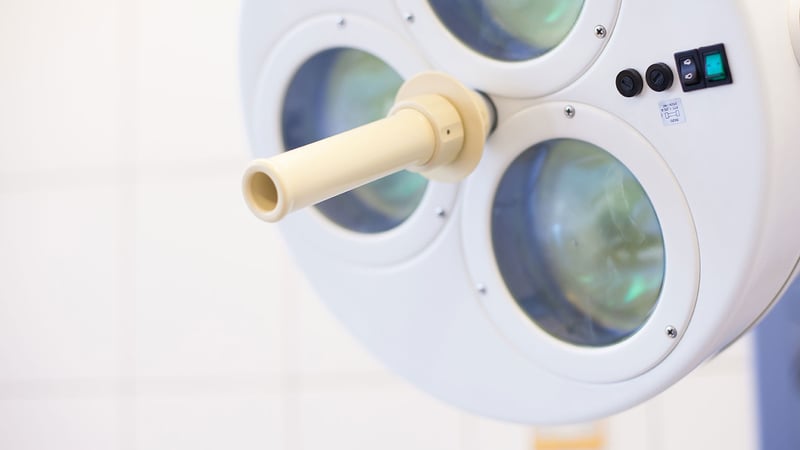
Surgical lamp at Dr. Homssi's practice in Berlin for laser treatment of ingrown toenails
The method

Modern laser treatment, our surgical focus in Berlin

In laser treatment of an ingrown toenail, the ingrown nail edge is removed in a targeted way and the corresponding section of the nail growth zone is precisely ablated with medical laser energy. The procedure is generally very gentle, with a small wound area, a short healing time and a success rate of around 90%.

All about laser treatment

  • Precise and gentle on tissue

    Only the affected part is treated; the healthy nail bed is preserved.

  • Germ-reducing laser energy

    The laser energy reduces germs and stops bleeding, which lowers the risk of infection.

  • Minimal downtime

    Many patients return to their daily routine on the same day; closed shoes are usually possible after around 2 weeks.

  • Outpatient at the practice

    We carry out minor procedures as outpatient procedures at our practice, without a hospital stay.

Laser and the classic method

Why laser treatment is our method of choice

The classic Emmert procedure is an established and proven method, and we also perform it. For most findings, however, laser treatment offers the gentler overall result.

Classic Emmert procedure

  • Wedge-shaped excision with scalpel and stitches
  • More bleeding during the procedure
  • Wound healing usually takes 2 to 3 weeks
  • Depending on the technique, a larger wound and longer aftercare
  • Visible scarring possible
  • Proven, especially in advanced cases
Our main focus

Modern laser treatment with Dr. Homssi

  • Precise laser application with little bleeding
  • Immediate control of bleeding through coagulation
  • Wound healing often within 1 to 2 weeks
  • Laser energy reduces germs
  • Small wound, discreet result
  • Success rate of around 90%
Your treatment pathway in Berlin

Four steps back to a pain-free daily life

  1. Appointment

    Book online; you will usually get a consultation appointment within 24 hours.

  2. Diagnosis

    Specialist examination and personal advice on conservative and surgical options.

  3. Laser treatment

    Outpatient, minimally invasive procedure under local anaesthetic, usually taking around 20 minutes.

  4. Aftercare

    Wound checks until fully healed, usually within 1 to 2 weeks.

For anxious patients

Worried about the procedure? Audiovisual sedation with AR glasses.

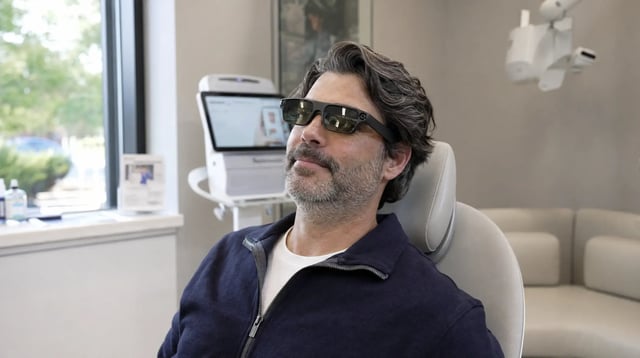
At Dr. Homssi's practice, we use AR glasses (XREAL) for audiovisual sedation. During the laser treatment, you immerse yourself in a film, music or calming nature scenes and neither hear nor see what is happening.

  • Audiovisual sedation: The AR glasses take you out of the treatment situation, visually and acoustically.
  • Low pain and calming: Local anaesthetic and distraction noticeably reduce tension.
  • For all age groups: Especially popular with patients who are anxious about treatment or have had negative experiences in the past.
  • Companion welcome: You can bring someone you trust with you.
Book an appointment with AR glasses

AR glasses for audiovisual sedation during laser treatment at Dr. Homssi's practice

Audiovisual sedation

with AR glasses during laser surgery

Dr. Univ.-PD Amro Homssi, Specialist in Orthopaedics and Trauma Surgery in Berlin
Your doctor

Dr. Univ.-PD Amro Homssi, Specialist in Orthopaedics and Trauma Surgery in Berlin

My aim is to provide treatment that is tailored to your needs and reflects current medical knowledge. At our practice on Greifswalder Straße, we offer a range of orthopaedic and surgical services with modern equipment, both conservative and surgical.

We carry out minor operations, including laser treatment of ingrown toenails, as outpatient procedures at the practice. Larger procedures take place at the adjacent hospital.

  • Specialist in Orthopaedics and Trauma Surgery, accident insurance consultant (D-Arzt)
  • Surgical focus: laser treatment of ingrown toenails
  • Outpatient procedures at the practice, larger operations in a hospital setting
  • Languages: German, English, Arabic, French and Italian
  • Over 3,000 satisfied patients

More about Dr. Homssi

Book appointment

Book your consultation appointment

Book a suitable consultation appointment with Dr. Homssi directly, at the practice or as a video consultation.

If the calendar does not load, please reload the page or email us. praxis@drhomssi.de
FAQ

Frequently asked questions about ingrown toenails

What gives quick relief for an ingrown toenail?

At an early stage, warm foot baths with a mild disinfectant additive, wide shoes and taking the pressure off the toe can help. If pus or proud flesh forms or the pain gets worse, you should have a doctor look at the toe.

Can I cut out the ingrown nail myself?

We advise against this. Cutting it out can easily cause small injuries, and an edge cut too short often grows in again, and deeper. Cut your toenails straight across and have an ingrown edge treated professionally.

Which doctor is responsible for an ingrown toenail?

In mild cases, podiatrists, GPs or dermatologists can help. In the case of inflammation or recurring symptoms, a surgically active specialist is the right choice, such as a Specialist in Orthopaedics and Trauma Surgery.

Can an ingrown toenail heal on its own?

At an early stage, the symptoms sometimes subside with foot baths, taking the pressure off and cutting the nail correctly. However, if the nail keeps growing in or pus and proud flesh form, it usually does not heal without treatment.

Does a nail brace help with an ingrown toenail?

In mild cases, a nail brace can lift the nail edge over weeks to months and stop it from growing in. In the case of severe inflammation or recurring symptoms, it is often not enough. More on the nail brace (in German)

What is the best treatment for an ingrown toenail?

That depends on the findings: in mild cases, foot baths, taking the pressure off or a nail brace are sufficient. In the case of inflammation or recurrent ingrowth, ablation of the lateral nail growth is advisable. For this, we recommend laser treatment, which has a success rate of around 90%.

Which symptoms indicate that an ingrown toenail needs treatment?

Typical signs of unguis incarnatus are persistent pain on pressure at the lateral nail fold, redness, swelling, proud flesh (caro luxurians) and purulent discharge. At the latest when inflammation recurs or conservative measures (nail brace, tamponade) have failed, surgical treatment with laser matrix cauterisation is indicated.

Does health insurance cover laser treatment in Berlin?

Medically necessary surgical treatment of an ingrown toenail is generally covered by statutory health insurance. In Berlin, the laser method is mostly a self-pay or private service, as it goes beyond the standard benefits catalogue. You will receive a transparent cost estimate in advance.

Where is your practice for laser treatment in Berlin?

Our practice is located at Greifswalder Str. 137-138, 10409 Berlin. We are very easy to reach by public transport and treat patients from all over Berlin: from Mitte, Charlottenburg, Prenzlauer Berg and Kreuzberg to Steglitz, Zehlendorf, Pankow and the surrounding Berlin area.

Appointments in Berlin

Get rid of the pain, this very week.

Book your appointment with Dr. Homssi in Berlin now. Short-notice appointments for acute cases.